Recommended Reading!
“How we treat our land, how we build upon it, how we act toward our air and water, in the long run, will tell what kind of people we really are.”
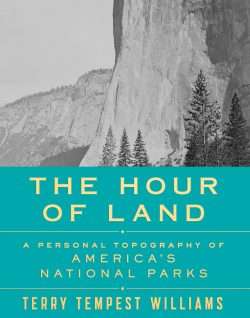
Those words were spoken by Laurance S. Rockefeller back in 1965 when President Lyndon B. Johnson put him in charge of the White House Conference on National Beauty. Subsequently, Rockefeller enlarged upon the vision of his father John D. Rockefeller, Jr. by deeding the family’s 1,160 acre JV Ranch to Grand Teton National Park. I am reading his story and that of many others in The Hour of Land: A Personal Topography of America’s National Parks by Terry Tempest Williams.
I read those words of the grandson of Standard Oil founder John D. Rockefeller, Sr. – business magnate and philanthropist considered to be the wealthiest American of all time … and, largely, the richest person in modern history (according to Wikipedia) – just after hearing Amy Goodwin’s most recent report about the North Dakota Access Pipeline on NPR’s “Democracy Now” yesterday.

WWII Gasoline Rationing Card – Front

WWII Gasoline Rationing Card, Back
The irony was not lost on me, but still it was hard to wrap my head around this statement by a generational oil billionaire and the current controversy over the traditional lands of the Standing Rock Sioux Tribe. The drama being played out in North Dakota – replete with civil rights violations and serious challenges to freedom of the press – seems like a gigantic replay of past generation protests with a chorus that goes “When will we ever learn?”
And when will we ever begin? Could we not say “no” to this pipeline? Could we not bear to have a bit less access to oil? Could it not become scarce and the price of gasoline go up? Could we not begin the process of doing without and turning our actions (as well as our thoughts) to alternative energy sources by mandate? Must we continue to rely only on philosophy and conscience?
I remember gasoline rationing during World War II – 3 gallons a week for ‘ordinary’ people. Few people we knew had cars. Those who did used them seldom and mostly for necessity – to get to the doctor or to get the monthly groceries. We ‘sacrificed’ willingly – “for the war effort.” Why can’t we do it again – for the good of our earth? For The Hour of Land? What kind of people are we… really?
As a society, Americans no longer care to sacrifice for the good of the country. Everyone is wedded to their trucks and SUVs. Walmart has kilked small town businesses making driving to a big store necessary. The realization will only dawn on people when it is too late. If four dollar a gallon gas didn’t get people to conserve, uulteristc motivation won’t. It’s depressing.