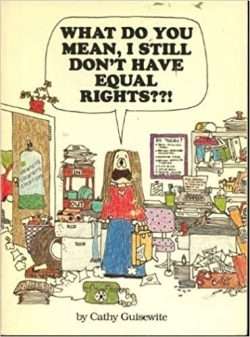
 On a day-to-day basis, I don’t think much about feminism or gender equality. Certainly, I clapped and cheered for the “Me Too” movement and am proud of all the women who have recently taken office at the national, state, and local levels of government.
And, I’m cognizant of those “five main issues” as described in a 2013 article in the New Statesman Magazine – “The Division of Domestic Labor,” “The Media,” “The Glass Ceiling,” “Social Inequality,” and “Violence Against Women.” (If you need a quick refresher course, check out https://www.newstatesman.com/v-spot/2013/05/five-main-issues-facing-modern-feminism.)
So, I’m always gobsmacked when I hear a reference to the ERA – the Equal Rights Amendment designed to guarantee equal legal rights for all American citizens regardless of sex – and the fact that it never received ratification by the required three-fourths (38) of our 50 states. Only 35 approved it and in later years, four of those 35 have attempted to rescind their approval. Since 1972 – for 47 years – we’ve been stuck with a non-ratified proposal. No equal rights for women under our U.S. constitution. Hard to believe!
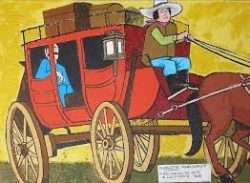
Charley Parkhurst
I wonder what Charley Parkhurst would think if s/he were still around. According to Wikipedia, Charley Darkey Parkhurst, born Charlotte Darkey Parkhurst (1812–1879), also known as One Eyed Charley or Six-Horse Charley, was an American stagecoach driver, farmer and rancher in California. Born and reared as a girl in New England, mostly in an orphanage, Parkhurst ran away as a youth, taking the name Charley and living as a male. He started work as a stable hand and learned to handle horses, including to drive coaches drawn by multiple horses. He worked in Massachusetts and Rhode Island, traveling to Georgia for associated work.
I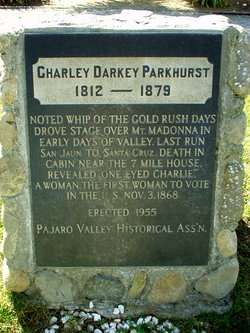 n his late 30s, Parkhurst sailed to California following the Gold Rush in 1849; there he became a noted stagecoach driver. In 1868, he may have been the first anatomically female individual to vote in a presidential election in California. At his death, it was discovered that he was anatomically female, as was the fact that he had given birth at an earlier time.
Would Charley think that we are on the right track? Or would s/he expect more of us? What advice would s/he have for us? In 20 more years, we will have been working on this equality-for-women-under-the-Constitution concept for as many years as Charlotte/Charley lived. It’s probably one of those apples and oranges things, but I can’t help but wonder if we’ve accomplished as much for ourselves as s/he did. Food for thought…
0 Comments