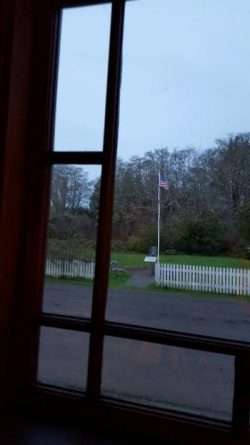
Out Our West Window
Not that I’m complaining, mind you, but it’s that damned east wind. When it whistles and gusts and blows unrelentingly over Willapa Bay right toward us, those of us living on the inner edge of the Peninsula freeze our tushes off. There have been times when, even with our heat cranked up to a tropical number and fireplaces roaring at full blast, we can’t get the inside temperature past 54. Not comfortable. If there should happen to be a power outage (which has happened on occasion) woe be unto us! Fortunately this isn’t one of those times… yet.
I always blame it on this old, drafty house. Even though Nyel and I had it insulated before we moved here full time and, even though we have the east-facing storm windows and storm doors battened down, the house seems to suck up the cold. Perversely (I admit), I take some pleasure in hearing similar complaints from many others who live on this edge. Even from those with new homes constructed with every modern energy-saving technique. It’s just the way it is. The flip side of the ‘fabulous view’ coin.
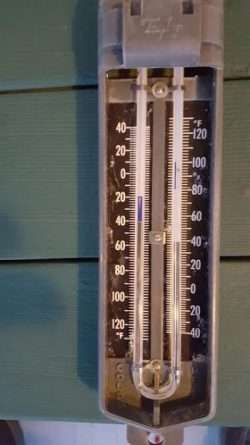
On Our Porch – Feels Like 35
As I add layers of clothing and resort to wearing my down jacket inside (at least in the east end of the house), my thoughts go back to the days of my forebears – before electricity, before miracle fibers, before radar maps and NOAA weather forecasts. People survived but sometimes the toll was extreme. Take the winter of 1875 for instance.
The night of January 1, that year, the weather turned sharply cold; the thermometer hovered at zero. When morning dawned, parts of the bay were sheets of solid ice, the oysters embedded within it. As the tide moved in and then out, the oyster-laden ice simply floated out to sea, totally wiping out many beds. The freezing weather continued for eight long days and nights.
Although the industry recovered quickly from “the big freeze of ’75,” and oystermen soon regained their annual production rate of 200,000 baskets, the following December a second weather event again caused havoc. On the beds, wind-driven waves washed oysters away completely or piled them into high ridges causing the oysters at the bottom to suffocate.
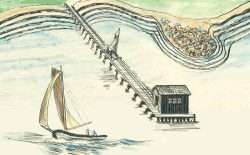
The Dock in Oysterville, 1884
Despite these weather disasters, oystermen remained optimistic and, in 1884, built a half-mile long dock at the north end of town. It was equipped with a track and sail car which could be used to get back and forth to the deeper water where their boats were anchored. When the bay again froze over in 1888, however, the dock was swept away by floating ice during the break-up of a spring thaw. It was never replaced.
That those early residents were intrepid, I have no doubt. But I can’t say that thoughts of then do much for my huddled spirit during these cold snaps. If I were a robin, my head would be right under my wing for sure!
0 Comments