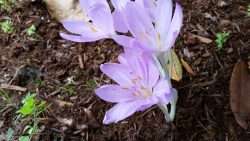
Crocus in Our Garden
My Master Gardener friends will no doubt shake their heads at me yet again, but yesterday I honestly thought that we had skipped fall and gone straight to winter. It wasn’t the weather (which was mild but still fall-ish feeling.) It was the lovely lilac crocus blooming fit for a garden show!
Years ago, when I saw crocuses in December, I was also sore amazed and found that those lovely little flowers are not only harbingers of spring but also of winter. Little did I know that they can also signal the onset of fall. So… here they are right on time!
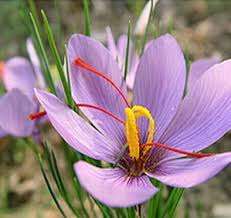
Saffron Crocus – The Real Deal (Internet Photo)
Apparently there are more than 50 colors of crocus ranging from white or pale pink and lavender to more intense shades of showy blue-violet, purple, orange, pink or ruby. From the descriptions of the most common fall crocuses, I think ours might be the saffron crocus, said to be: a fall bloomer that produces lilac blooms with bright orange-red, saffron-rich stigma. The information went on to say that as an added bonus, you can remove the stigma as soon as the blooms open, then dry them for a few days and use the saffron from seasoning paella and other dishes.
Probably wishful thinking on my part as I adore paella. We live in exactly the right place to readily get all the ingredients except for the saffron which costs the earth. Wouldn’t it be super if this really was the right kind of crocus! We have a fabulously beautiful paella pan crying to be used!
But then my eye caught an article which said: All parts of autumn crocus plants are toxic with resulting symptoms from ingestion similar to those of arsenic poisoning. Come to think of it, those stigma aren’t nearly reddish-orange enough. I think I’ll not pursue the harvest with this particular plant. Better to order some saffron bulbs (C. sativus) and know for sure – bearing in mind that saffron is not called “red gold” for nothing. It is the world’s most expensive spice.
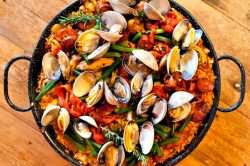
Paella!
Even so, they say it’s the time-consuming harvesting process that drives the price up. It requires about 150 plants to yield 1 gram of saffron. Most recipes call for “a large pinch” or “several threads” of saffron. That’s no doubt less than a gram but… even so. At about $8.50 per plant, and three stigma per flower, even with my own harvest labor thrown in, I’m waffling.
Obviously, the thing I need is a consultation with the household’s chief chef and gardener. He’ll know just how to proceed. He always does.
0 Comments