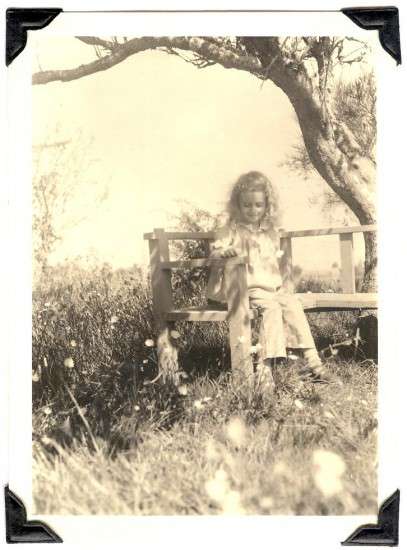
- Sydney in Oysterville, 1940

When I was growing up, the adults in my life (and there were lots of them) would often remind me that “pretty is as pretty does.” I’m not sure why and, in retrospect, I doubt that I knew then. I don’t think I was an especially naughty or cranky little girl and I realize now that those particular words probably did not have the desired effect. I was clear about their meaning but since I couldn’t see how the words applied to me, my interpretation was that I wasn’t very pretty to look at. Otherwise, why would everyone be so concerned about my behavior?
There were lots of other confusing proverbs and aphorisms, as well. How about “don’t judge a book by its cover” and “appearances are everything?” I still ponder that one. Designers, for instance, get big bucks for producing book jackets that will entice buyers. And our society puts an enormous amount of pressure on us to look our best… But don’t forget “beauty is only skin deep.”
How could “many hands make light work” and “too many cooks spoil the broth” both work? By the time I entered the work force in the late 1950s, the very democratic process of making group decisions had become popular, yet the behind-the-scenes mantra was “a committee of one gets things done.” I still tend to believe that, especially when I look at our political process.
In introspective moments I wonder how we sort through all these ‘words to live by.’ I sometimes consider what my life would be like if I looked at that half full cup, rather than at the half empty one. Just how much did those comfortable sounding adages shape my life? In this age of sound bites and buzz-words the problem compounds; unasked for advice and suggestions come from every direction. Ah well, “Every path has its puddle.”
Andy Rooney, move over! Sydney: Loved your words for today and often ponder them myself.
Mine is “too many cooks bump their butts.” My grandmother-in-law used to say about the babies “Pretty in the table, ugly at the table.” I wasn’t sure how to take that with regards to my own children. Was this commentary or prediction?
So true! I’ve often pondered (probably too often really) the meaning of “don’t look a gift horse in the mouth.” Does it mean that looking too closely at a gift can be disappointing and ruin the good feeling of receiving it, or does it mean that examining a gift too closely makes you seem ungrateful to the giver? Or both? Or neither? Where do these weird sayings come from and why do they persist for so long after the meaning is lost in obscurity?
Sydney, I thought of another one this morning as I got ready to go to Astoria and debated about putting on make-up. My maternal grandmother always said, “Always keep your spurs on. You never know when you’re going to run into a horse.” Despite the fact I don’t practice that as I probably should, I like the saying.