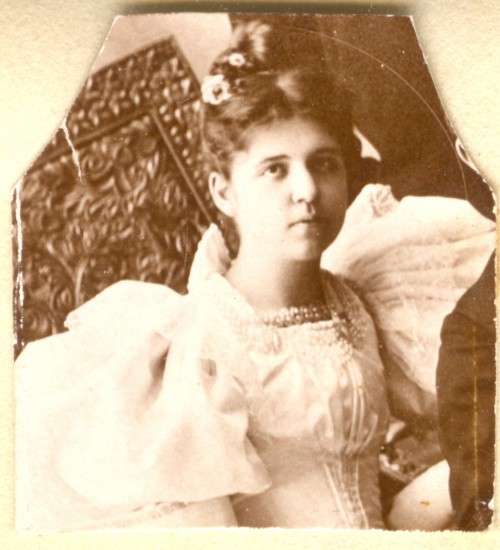
 Now that it is dark outside well after I get up in the morning and long before I retire each evening, my thoughts turn to my Grandmother Helen Espy. They always do at this time of year and especially when it is stormy. And even more especially when the power goes out which, thankfully, has occurred yet this season, but probably will.
How she raised seven children in this big, drafty house with no electricity and only cold running water from the rain barrels on the roof, is a source of constant amazement to me. She was a tiny woman – barely five feet two and about ninety pounds when she married my grandfather at age nineteen. They used to laugh that he could span her waist with his hands.
But, of course, size has nothing to do with strength – inner strength, that is, which is the most important kind when it comes to perseverance and endurance and character. (She also had humility, a quality I admire and should probably aspire to more seriously.)
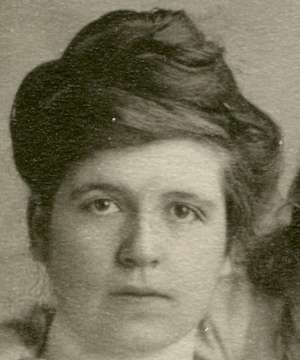 It would be easy to assume that she was able to endure the lack of amenities here in Oysterville because she had never known otherwise, but that is not the way it was. She was raised in East Oakland, California where there were electric lights and gas heat in the houses and trolley cars on the streets. She and my grandfather had planned to live there always, but those pesky ‘circumstances’ beyond their control brought them to Oysterville in 1902.
Helen was then 24, pregnant, and already the mother of two. Their “short stay” turned into a lifetime – fifty more years of joys and sorrows and much of that time without benefit of powered assistance. It was a carpet sweeper, not a vacuum cleaner; a wood stove, not a furnace; a scrubbing board and clothes line and a sad iron, not a washer and dryer and steam iron. Nothing was at the flick of a switch. It was all by “main strength and awkwardness” as she used to say.
Yes, I think about all of those things at this time of year as we approach the season of the “Big Dark.” I also think about the fact that when rural electrification finally came to Oysterville in 1938, my grandmother was already losing her eyesight. Hers was destined to remain a world of dimness, despite electricity. Yet, I always think of her as a bright spot in my childhood and a shining example of a life well lived – pleasant reflections on a dark day.
As a fan of history it is easy for me to get lost in your stories of life in Oysterville, Sydney. I hope this reflection can be included in your Willard book which I am most anxious about, as you well know!