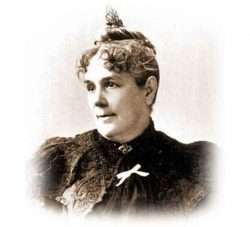
Mary Towne Esty (1634-1692)
It was on this day in 1692 that the first witch was hanged in Salem Village, Massachusetts Bay Colony. It was a Saturday – the second one in June – and was the last day of Bridget Bishop’s life. Nineteen others would be found guilty of witchcraft and executed that year. My eight-times great-grandmother Sarah Towne Esty was one of them. As it happens, she was the last to be hanged — on on September 22, 1692.
Sarah was 58 years old, married to Isaac Esty, a cooper, surveyor, and farmer. She was the mother of eleven children, was noted in the community as a pious and helpful neighbor and was called “Goody (for Goodwife) Esty” by all who knew her. In our family, she is known as ‘The Blessed Witch.’

From Mary Towne Este’s Petition
Goody Esty’s widowed husband spent the remaining years of his life petitioning for the reversal of his beloved wife’s sentence. Finally, in 1711, the Esty family was awarded 20 pounds from the government in recompense for her “wrongful execution.” Isaac died the following year a few months shy of his 85th birthday and, in my mind, he is ‘Blessed’ as well.
The trouble began in February 1692, when nine-year-old Elizabeth Parris and 11-year-old Abigail Williams, the daughter and niece, respectively, of the Reverend Samuel Parris, began experiencing fits and other mysterious maladies. A doctor concluded that the children were suffering from the effects of witchcraft and, with the encouragement of the doctor and their parents, the girls named those allegedly responsible for their affliction.
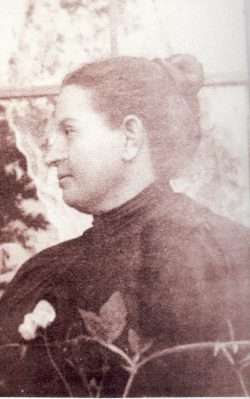
Julia Jefferson Espy my great grandmother; Mary Towne Esty’s 5 tines great granddaughter
There has never been a satisfactory answer to the hysteria that gripped the Puritan community of Colonial Salem during those years of the late seventeenth century. Other “afflicted” Salem residents joined the little girls in making accusations and, in all, more than 150 women and men from Salem Village and surrounding areas were accused of satanic practices. Of those, 19 were executed – 14 women and five men from all walks of life. All were hanged except for one man who was crushed.
A special Court of Oyer and Terminer [“to hear and to decide”] under Chief Justice William Stoughton had been convened in June 1692 to judge the accused. Most of those tried were condemned on the basis of the witnesses’ behavior during the actual proceedings — behavior characterized by fits and hallucinations said to have been caused by the defendants on trial.
Four months later the Court of Oyer and Terminer was dissolved by the Governor of Massachusetts and replaced with the Superior Court of Judicature which forbade the type of sensational testimony used in the previous trials. Executions ceased and those awaiting trial were released; those sentenced to death were pardoned. The Salem witch trials had finally ended
This account reminds of the days in Germany when a certain people were considered (?)…As is sometimes the case, when arrogance and ignorance prevail, so does loss of value, often times of a life, or lives. Thank you for this reminder, this morning, as I consider the vast canyon between Bernie and “the donald-qucdk, quack” and the loss of a fighter whose skin color was in contrast to the spirit of a good man.