 You’d think that, after 14 years of retirement following my 39 years as a classroom teacher, I’d just blow off the old criticism about teachers being overpaid for the insignificant work they do. But, I’m here to tell you that it just isn’t so. Mr. Ron Craig’s letter in the Observer this week set me off, once again. He didn’t say anything new – the usual harangue about our poor education system and how teachers are overpaid and work very little and blah blah blah.
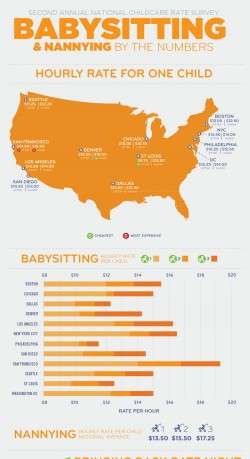
My answer to him is probably just as trite: Let’s just pay teachers at the same rate we pay babysitters. I understand that the going rate in our nation is now $13.50 an hour for taking care of one child. YIKES! But we are in a depressed area. So let’s round down to $10.00 an hour. Times 6 hours a day, (that’s according to Mr. C. who doesn’t factor in any additional hours for meetings, workshops, lesson planning, correcting papers, putting up bulletin boards…). So that’s $60 a day. Times 182 days a year. That’s $10,920 for an annual salary. For one kid. Babysitting only.
Now, let’s say that the average class size is 24 kids (though I had many classes of 30 and 35 in my day and I think 22 is considered optimum for Primary Grades now.) $10,920 a year times 24 kids brings it up to $262,080 for a 182-day school year. That’s just for baby-sitting mind you. No teaching. No individualized instruction. No requirements for the ‘babysitter’ to have a higher education, years of experience, or any of that.
 Granted, on the open market the aforementioned rounded-down-$10-per-hour-per-kid would be for one child only. Most sitters charge just one dollar for each additional kid up to a total of four. Then… get a second sitter. So, let’s see. That would be $13 per hour for every group of four kids, times six hours, bringing the total to $78 per day or a $14,196 annual salary for each ‘teacher’ of four kids. Which would probably keep each salary within reason even to the most unreasonable critics, but in the end would require six “teachers” to cover the 24 children… So now we are paying $85,176 per year to cover those 24 kids. Babysitting only.
Or, I could simply ask the Mr. C. why, if teachers are so overpaid and have it so easy, isn’t the market glutted? And finally, who taught you to read and write and add and subtract and give you the confidence to write letters to the editor? Or did all that come by osmosis?
And, by the way, Mr. Craig. Most teachers will be among the first to agree with you that our education system is broken. So are a lot of other aspects of our society. Perhaps what we need, Mr. Craig, are more helping hands and fewer pointing fingers.
One of my teacher friends had two 11 hour days this week. Lots of teacher torture meetings. That doesn’t count the time she will spend at Starbucks over the weekend correcting essays. My son, who is an art teacher has an 8th period class of 36. Sixteen on IEPs, ten more that should be, one with full-blown Autism and no para. He figures he gets in 35% instruction time and the rest is behavior management. These people are seriously under paid!
Very well said Sydney! I believe teachers earn every cent they make and should make more when you figure that education is the backbone of our country. There are many dedicated teachers & if the majority of students came to school to learn and do their best it would make teaching so much easier & rewarding but working with so many troubled students is quite a chore. I strongly support and compliment our teachers!
Teachers not only teach academics anymore, but also subjects for which my parents took responsibility, back in the day. That’s a lot of work for one six-hour day.
I’ve always thought that our kindergarten and elementary school teachers should be given the highest salaries in the educational system, at the least, and not those PhD profs who mostly have TAs teaching their classes. If we give our kids the best at the beginning of their start to life and learning, the benefits grow many-fold—and not just for that kid but for all of us.