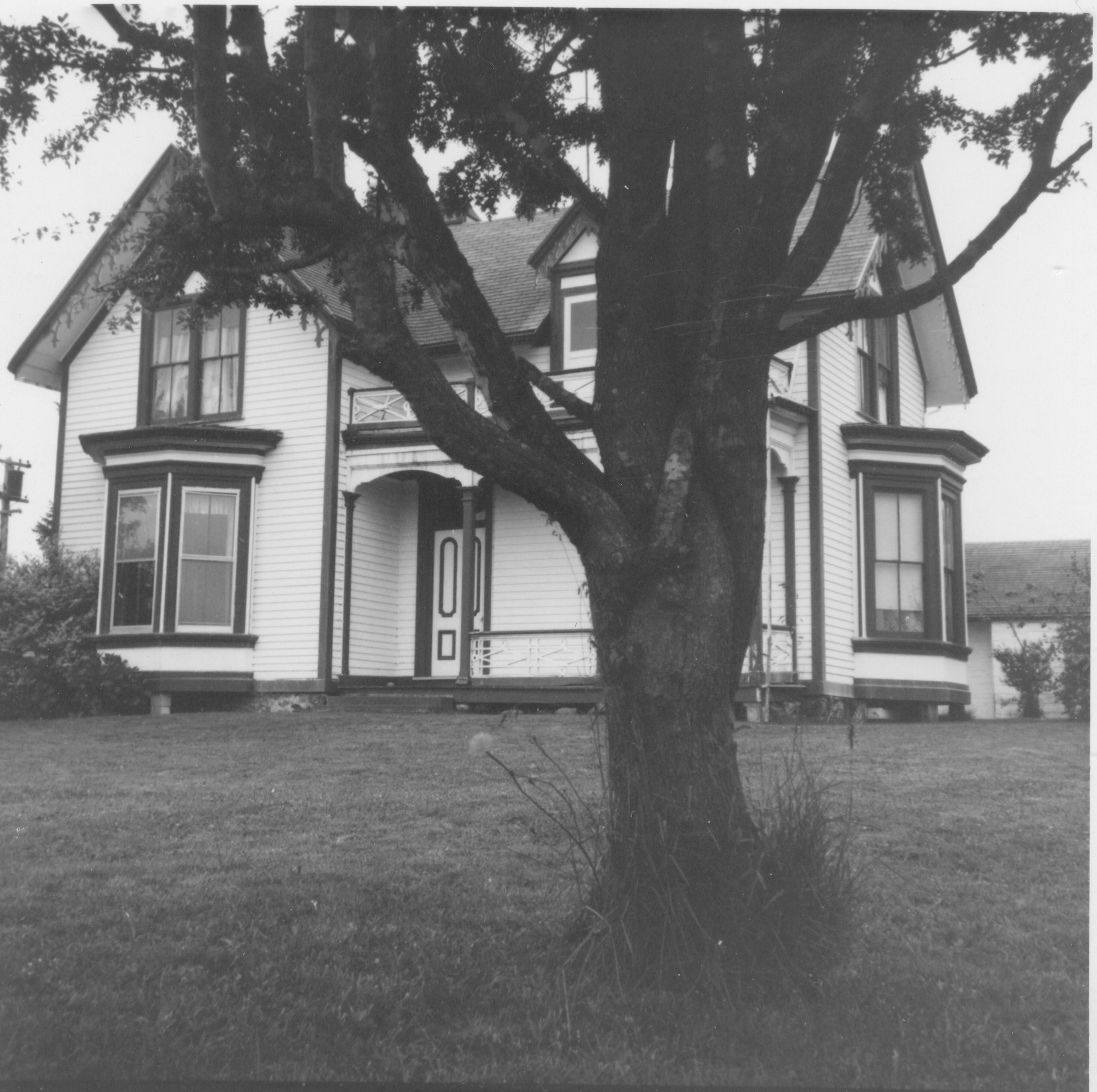
H.A. Espy House, 1964
When you’ve been associated with a house for more than three-quarters of a century, it’s easy to take for granted its unusual features and even its quirks and difficulties. In my childhood, I’m sure I never even noticed that these ceilings were higher than most or that the electrical outlets were few and far between. In fact, I’m sure I assumed that everyone else lived just like we did and that the wind whistled through their house cracks during storms just like it did through ours. It would never have occurred to me that a house built in 1869 might be different than one built in 1939 or 1949.

Light Switches
Somewhere between that naïveté of childhood and the penny-dropping realizations of adulthood enters another culprit. Although I know (and have known for some time) that there are special accommodations that must be made when one lives in an old house, I long ago arrived at that phase of ‘maturity’ in which everything simply is ‘as it should be.’ I take for granted many of the architectural niceties and problems that we live with every day. I no longer see them until a visitor “ooohs” and “aaaahs” and points them out.
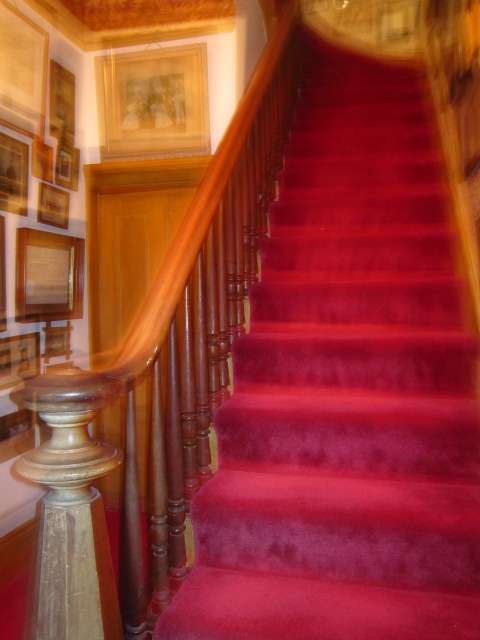
Stairway
Consider, for instance, our push-button light switches. Those are what we’ve had since electricity came in with FDR’s rural electrification program in 1938. I was two so I’m sure I didn’t notice. I’ve gone on not noticing ever since – except when we had our wiring checked and re-checked in the 1970s and, again, in the 1990s. (As in who knew anything about knob-and-tube wiring until then? Those unseen, infrastructure things are right at the top of the taking-for-granted list!)
I do think about our lovely-looking but hell-on-the-knees steep, curving stairway these days. I don’t go up any more than I have to and always marvel at how younger visitors leap up two at a time. Actually, I try not to watch. It’s too visual a reminder of how I ‘used to be.’ It was not too long ago that someone mentioned that those stairs wouldn’t be up to code nowadays – a fact that I suddenly realized could be applied to our house in its entirety.

Transoms, Old-fashioned ‘Air Conditioning’
And as for other things I seldom ‘see’ – what about the checked varnish on all the old doors upstairs and the transoms above them? Or the windows that can no longer be raised or lowered because the house has settled them forever in place – and never mind the layers of paint that also prevent them from being opened. Actually, that paint is as good as caulking when it comes to wind, and there are enough other air leaks throughout the house to keep claustrophobia at bay (so to speak.)

Settling Down
I’ve often compared this house to a beloved family member or treasured friend and, in this instance, I think the analogy is right on. How often we take our nearest and dearest for granted! We overlook or fail to see those character flaws that could become perpetual irritants just as we become so accepting of the positive traits that we forget to ever mention them. ‘Taking for granted’ is not necessarily all bad, but a purposeful look around now and then doesn’t hurt all that much either.
When it came to buying on the Peninsula, I thought longingly about those lovely century-old homes, until I had to haul my over-half-a-century-old body up and down a few of those staircases. Very happy that I settled on a house that’s just a tad bit older than I–and single-story, to boot.
I live in an old house, 1896 but the push button lights are all gone. But if a thing works why change it. That’s what I say. Yes, if you live in an old house long enough, it does just grow around you, it gets inside your head.
I know the quirks of an older house, but the newer home have no soul. I would rather fuss with the quirks.